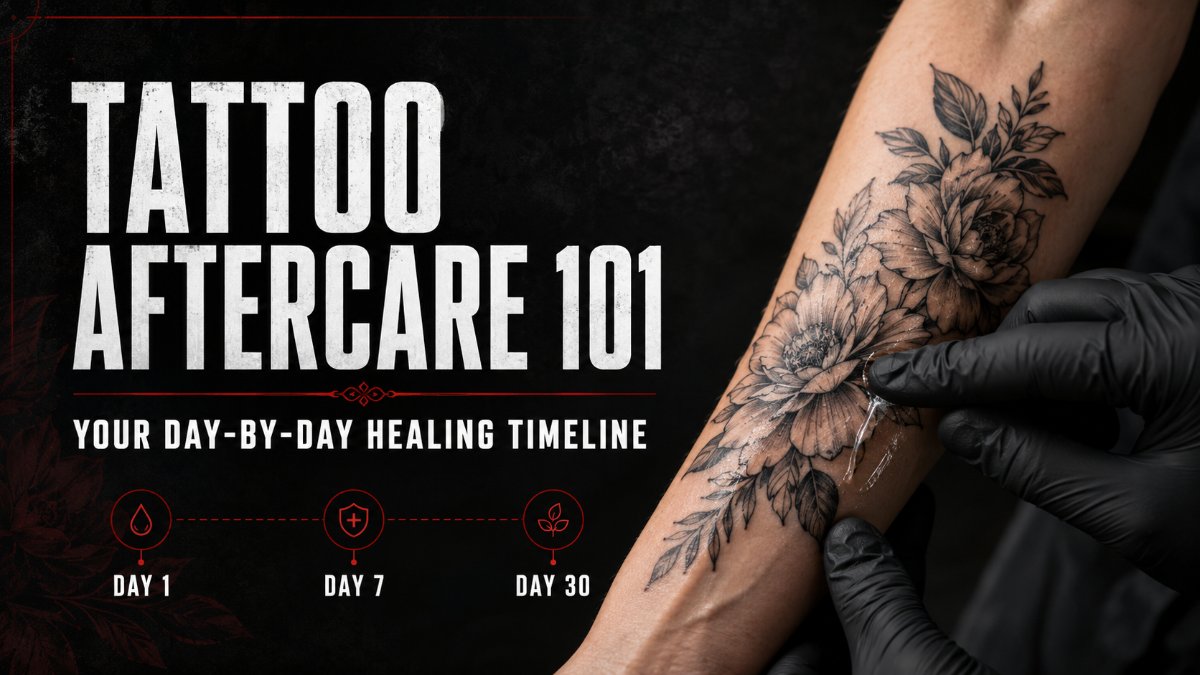
Tattoo Aftercare 101: Your Day-by-Day Healing Timeline
A fresh tattoo is an open wound before it's art. How you treat it in the first month determines whether your ink heals crisp and vibrant or blotchy and scarred. Here's what to expect, day by day, plus what to put on it.
The Healing Timeline
Days 1–3: Oozing and swelling Redness, mild swelling, and plasma/ink oozing are normal. Keep the bandage or wrap on as your artist instructs (usually a few hours to overnight), then gently wash with fragrance-free soap and lukewarm water. Pat dry — never rub.
Days 4–6: Scabbing begins Thin scabs form as the skin starts repairing. It'll look duller than day one. Keep it clean and moisturized, and resist the urge to pick.
Days 7–14: Peeling and itching This is the itchiest phase. Skin flakes off like a sunburn, sometimes taking small flecks of ink-colored scab with it — that's normal, not fading. Scratching or picking here is the single biggest cause of scarring and patchy color loss, so pat or lightly slap the itch instead.
Days 15–30: Surface heals, color looks cloudy The top layer is healed, but a hazy or slightly dull film over the tattoo is common as deeper skin layers keep repairing. This usually clears within a few weeks.
Weeks 4–8: Full healing Deeper skin layers finish healing over the following one to two months. This is also when it's safe to introduce sunscreen (SPF 30+) — never sun-expose a tattoo before it's fully peeled.
Red flags at any stage: worsening redness, spreading heat, yellow-green pus, or fever mean infection — see a doctor, not a forum.
Best Creams & Ointments to Use
Days 1–3 (protective phase): A thin layer of Aquaphor Healing Ointment is the industry standard — unscented, dermatologist-tested, and effective at keeping the wound protected without heavy fragrance or irritants. Apply thin enough that you can still see skin through it; too thick and it traps moisture, which invites infection. Avoid petroleum-heavy alternatives (like plain Vaseline) for this same reason.
Day 4 onward (moisturizing phase): Switch to a fragrance-free, dye-free lotion or a dedicated tattoo balm. Popular, well-reviewed options include:
Hustle Butter Deluxe — vegan, artist-favorite, good for both healing and long-term color upkeep.
Mad Rabbit Tattoo Balm — clean-ingredient formula aimed at color vibrancy.
Bepantol Derma — a gentler, dermatologist-favored pick if you have sensitive skin.
Whatever you choose, apply a thin coat 2–3 times a day, and stop if you notice irritation or breakouts.
Quick Do's and Don'ts
Do keep it clean, moisturized, and out of direct sun. Do wear loose clothing over it. Don't soak it (pools, baths, saunas) until fully healed, don't pick at scabs, and don't over-apply ointment.
Healing well isn't complicated — it just takes patience. Treat the first month like recovery, not decoration, and the art underneath will last.
This guide is for general information only and isn't medical advice. If you notice signs of infection, consult a healthcare provider.